

Built for trust
AI agents only earn a place in your workflow if admins can see what they’re doing and step in when it matters. Lightdash agents are designed around three principles: every interaction is visible to admins, risky actions need a human decision before they happen, and wrong answers get found and fixed rather than just logged. That matters because the usual alternative, broad warehouse access and ad hoc SQL, tends to leave little trace of what was queried, by whom, or whether anyone checked the result. Lightdash agents keep that same flexibility while making every question, generated query, and external tool call attributable, reviewable, and improvable. These principles come down to three pillars:
Admins manage all of this from Settings → Ask AI, which groups thread history, MCP activity, and Reviews in one place, scoped to the projects each admin manages.
Thread activity
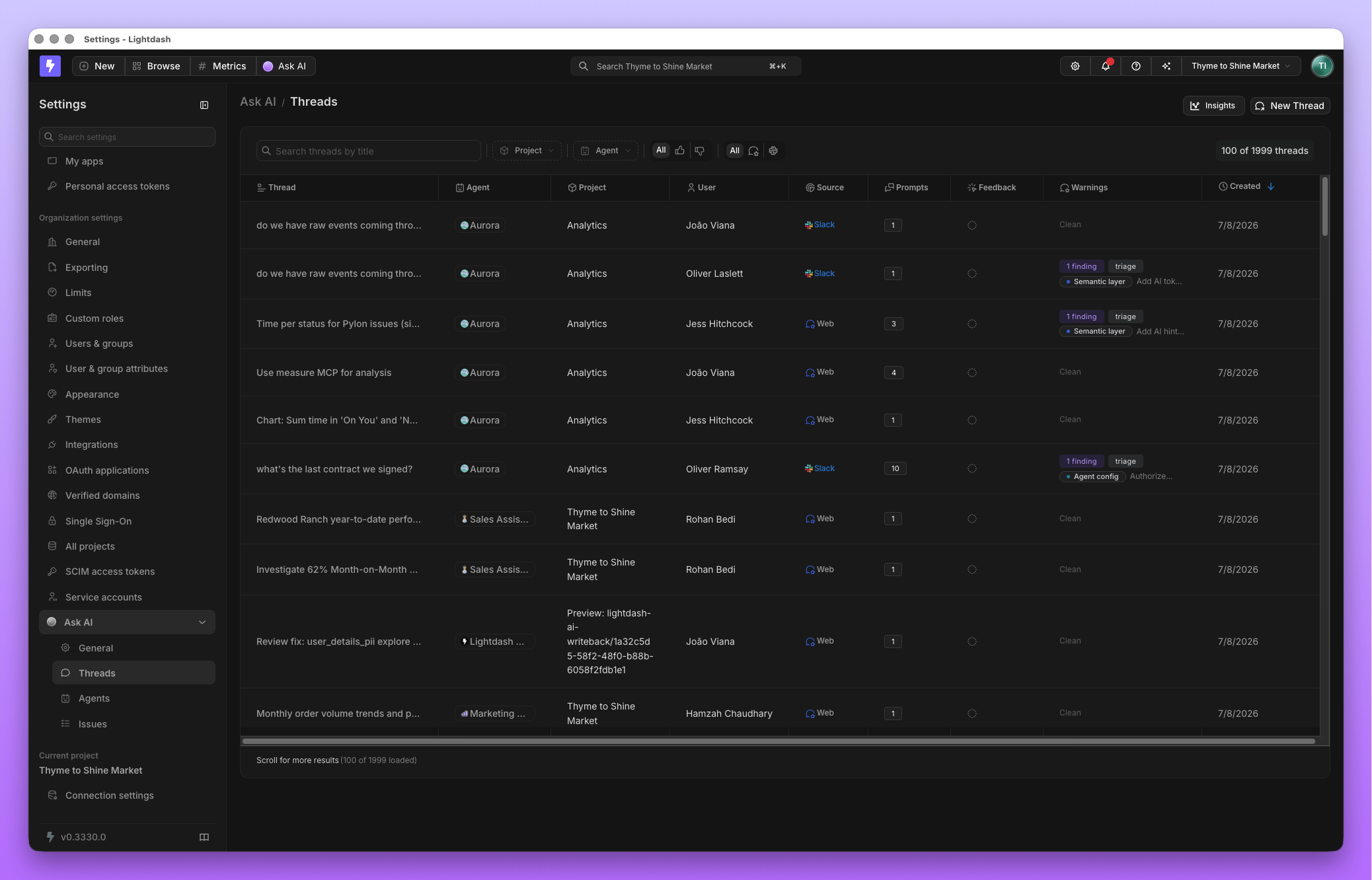
Every agent conversation, in the Lightdash app or Slack, is visible to admins under Threads. It’s the same record the person who asked the question sees: their question, the agent’s answer, and the query behind it. Admins use it to understand how agents are actually being used, and to pull real conversations into Evaluations as test cases.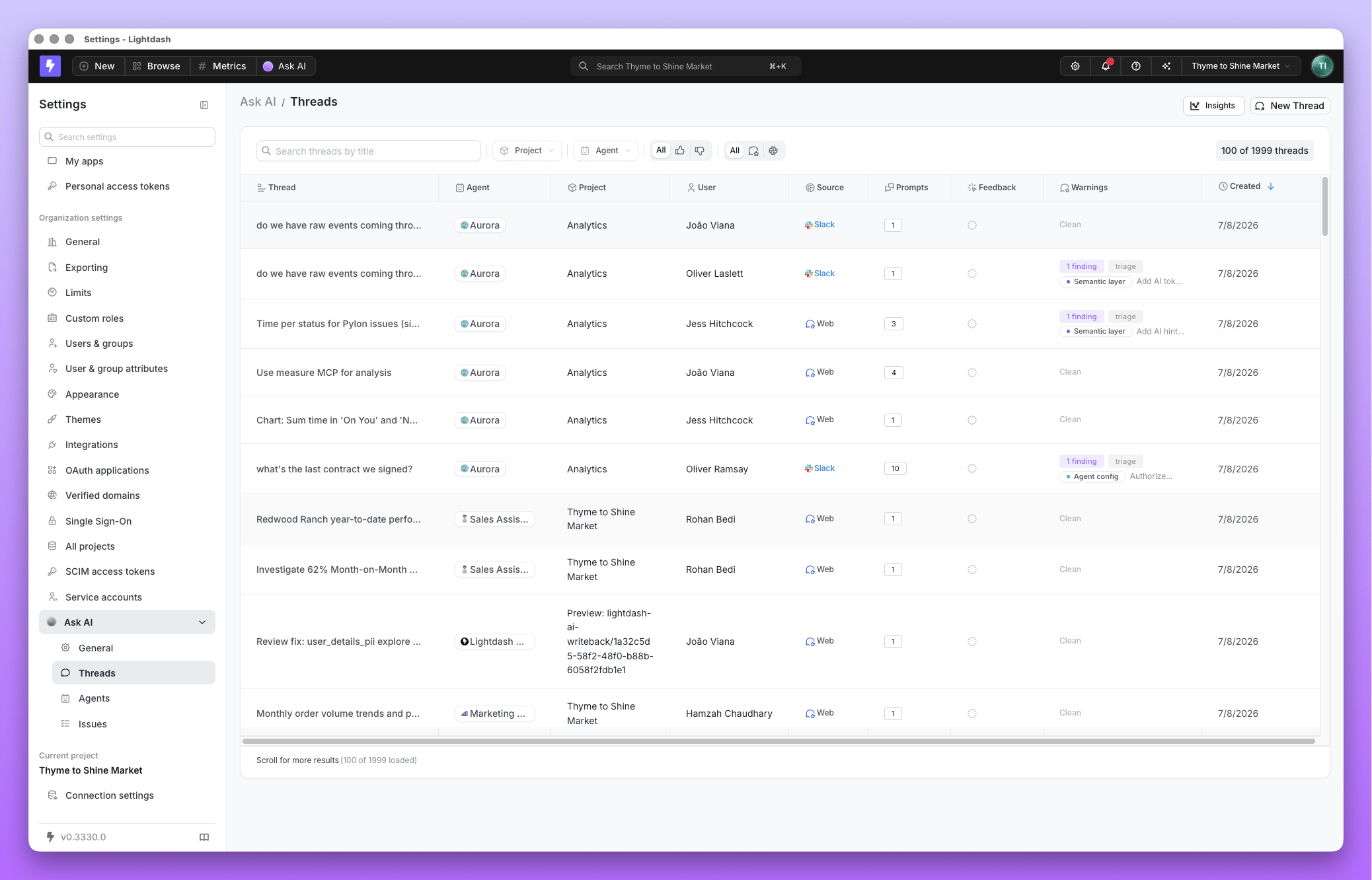
MCP activity
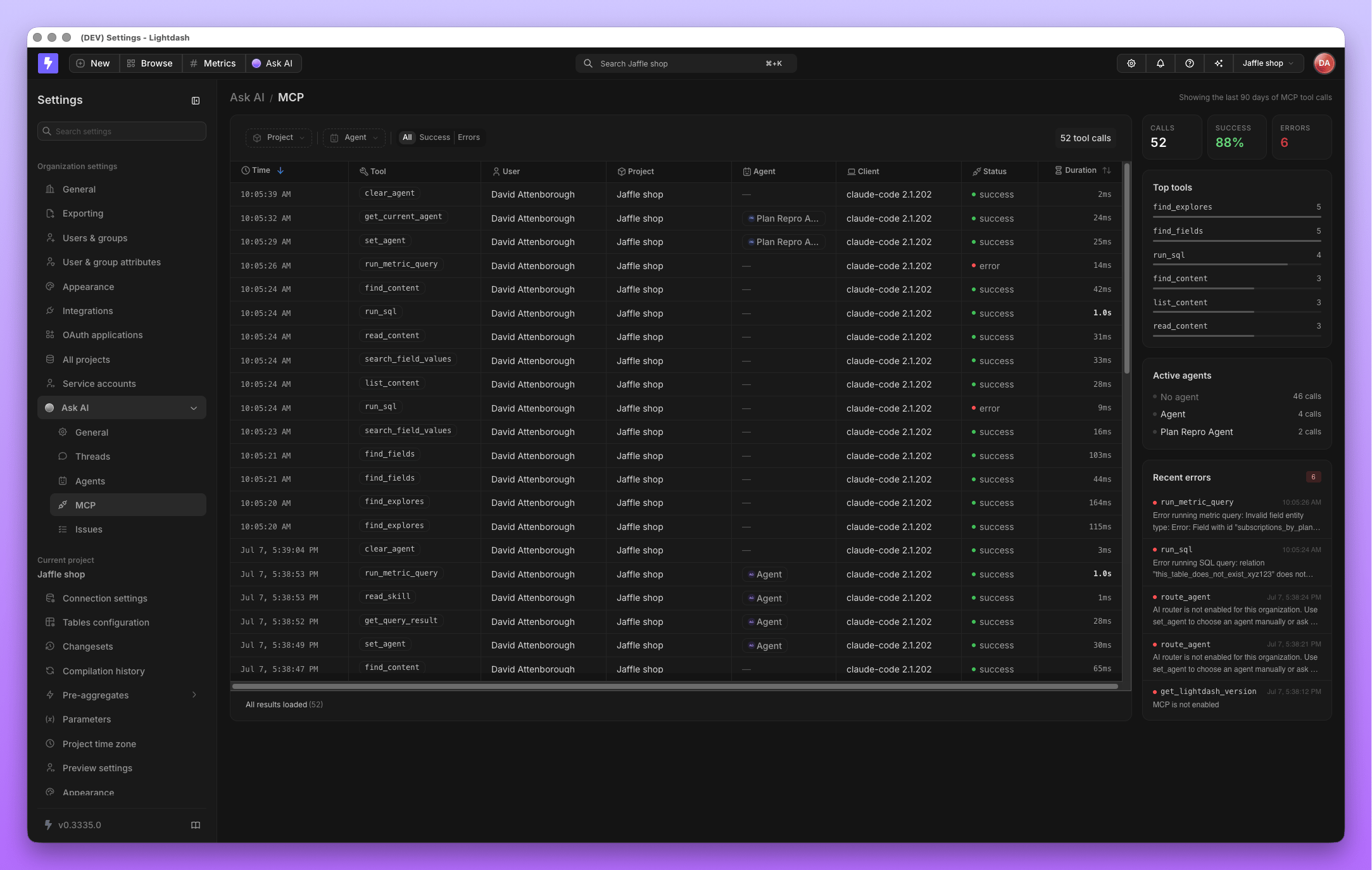
Agents don’t only answer questions about your data. Once you connect an MCP server, they can act in other tools too, filing a Linear issue or searching Notion, for example. The MCP tab extends the same visibility admins have into threads to those actions: what was called, by whom, and whether it succeeded.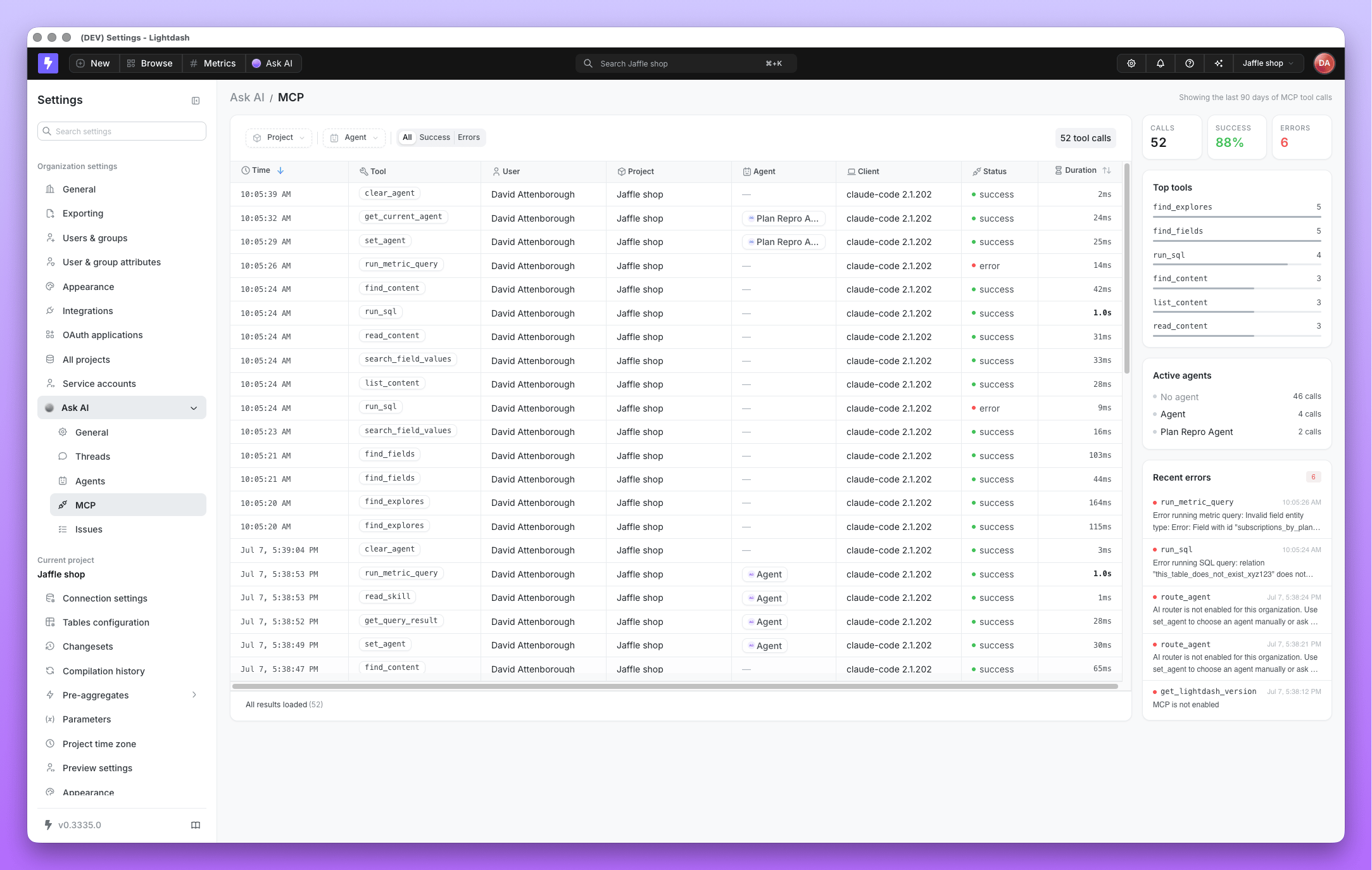
Closing the loop: Reviews & Evaluations
Visibility on its own is a log. Paired with Reviews and Evaluations, it becomes a feedback loop: Reviews scans agent turns for likely-wrong answers and proposes a fix, and Evaluations turns any thread into a regression test so a fixed issue stays fixed.Agents vs. raw SQL access
Related
- Reviews: the quality feedback loop
- Evaluations: regression-test agent behavior
- Data access control: what agents can query and see
- MCP servers: connect and curate external tools
- Autopilot: scheduled agent with its own activity log